

The best time to visit Kos, month by month
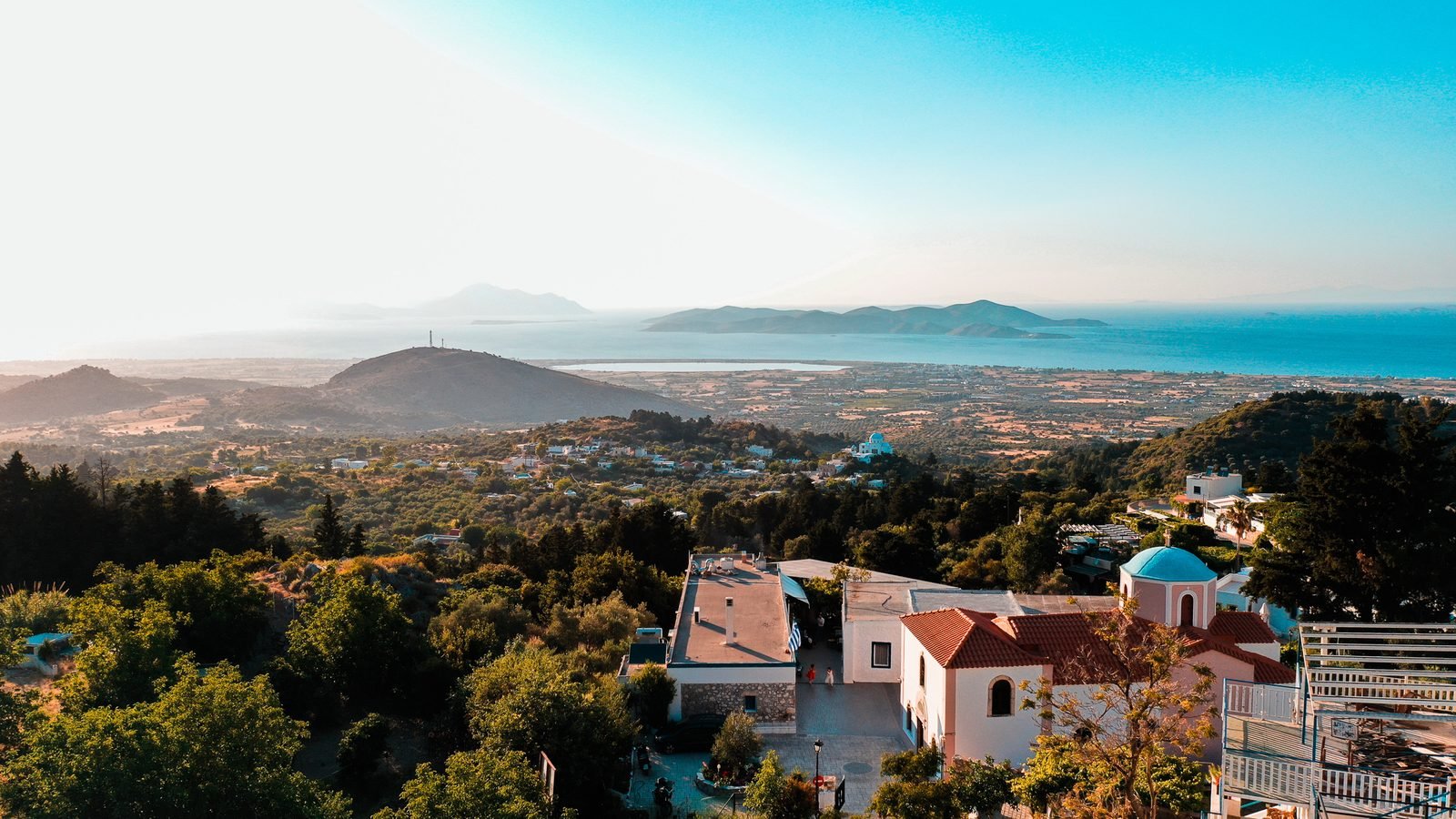
September. If you want one word, that is our word. Days average 27.6 °C instead of the 30.9 °C you get in July and August, the sea is 25.6 °C after a whole summer of warming, and the village empties out after the first week. Below is the full air and sea temperature table for Kos, a verdict on every month, and the two things that decide it for most people: the August heat and the meltemi wind.
On this page
The short answer
September is the best all-round month on Kos. The first week still carries the August crowd, and then the island exhales. The sea has spent four months warming and it is at its best of the year, the heat has come off the middle of the day, and the tavernas are still all open.
Late June is the strong second choice. Days at 28.5 °C, a sea at 22.8 °C, everything running, and northern European school holidays not yet in full swing. May and October are the two months for people who would rather walk, drive and look at things than lie on a sunbed. July and August are the hottest, busiest and most expensive, and they are still the right answer if you are tied to school dates.
One thing before the table. The best month for swimming is not the best month for walking up to Zia or round the Asklepion, so decide which trip you are taking first.
The numbers, month by month
These are the long-term averages for Kos from Climates to Travel, which we use as our single source so that every figure on this site agrees with every other figure. Averages smooth out the extremes, so read the August row together with the section further down.
| Month | Avg high °C | Avg low °C | Sea °C | Our verdict |
|---|---|---|---|---|
| January | 13.6 | 8.9 | 17.8 | Residents only. Wettest month of the year. |
| February | 14.0 | 8.9 | 16.9 | Coldest sea of the year. Nothing open at the beach. |
| March | 15.9 | 10.4 | 16.9 | The island is green. The water is not for you. |
| April | 19.1 | 12.8 | 17.3 | Season opening. Good walking, cold swimming. |
| May | 23.8 | 16.5 | 19.7 | Best month for sightseeing. Sea still brisk. |
| June | 28.5 | 20.6 | 22.8 | Beach season proper. Our runner-up. |
| July | 30.9 | 22.6 | 24.9 | Hot, busy, dry, completely reliable. |
| August | 30.9 | 23.0 | 26.1 | Warmest sea, hardest heat, highest prices. |
| September | 27.6 | 20.7 | 25.6 | The winner. Everything open, half the crowd. |
| October | 23.6 | 17.4 | 23.2 | Quiet and still swimmable. Closures from mid-month. |
| November | 19.0 | 13.6 | 20.3 | Season over. The rain comes back. |
| December | 15.1 | 10.6 | 18.5 | Village life, and not much else. |
Read the sea column on its own for a minute. The water lags the air by roughly two months, and that single fact explains most of the good and bad advice you will read about Kos. It is why October still swims at 23.2 °C while June only manages 22.8 °C. It is also why March, at 16.9 °C, is colder in the water than January at 17.8 °C.
April to early June
April is the month the island wakes up. Days at 19.1 °C, nights at 12.8 °C, and a sea of 17.3 °C that almost nobody swims in for pleasure. Shutters come off, the excursion boats to Nisyros start running daily from late April, and the tourist tax switches to its high-season rate on 1 April. Come in April for the countryside, the archaeology and the empty roads, not for the beach.
May is the month we would pick if the trip was about seeing Kos rather than swimming in it. Days at 23.8 °C are comfortable for walking the Asklepion or driving up to Zia for the sunset, about 35 minutes away. The sea at 19.7 °C is brisk: some people swim happily, most get in once and make a face. The meltemi also starts around mid-May, which matters more on the north coast than here.
By June the sea has reached 22.8 °C and the beach season is properly open. The second half of June is the closest thing on the calendar to September, so if school dates rule September out, look here instead.
Late June and July
The reliable beach months run from June to mid-September, and July is the most predictable of all of them. Days average 30.9 °C, nights 22.6 °C, the sea is 24.9 °C, and rain is close to a rumour. July and August between them get 2 to 5 mm of rain, against about 730 mm across the whole year. You are not going to lose a day to weather.
What you lose instead is space. July fills the beaches, the tavernas and the hire-car fleet, and prices move with it. That is a fair trade if you are tied to school dates and a poor one if you are not. For which beach is worth the drive in the middle of it, we go through all of them in our guide to the beaches near Kardamena.
August, honestly
The table says August averages 30.9 °C, exactly the same as July. That number is not wrong, and it is not the number you will live with. Highs in Kardamena are frequently reported at 38 °C, and occasionally above 40 °C. On those days the air stops moving in the early afternoon and the shade stops being cool. It is the one part of the Kos year we would not describe as gentle.
The sea is at its warmest, 26.1 °C, which sounds like the reward and half is. Water at 26 °C is beautiful to be in and does very little to cool you down. Nights are the other thing people underestimate: the average low is 23.0 °C, and a 23 °C night is a night you sleep through only with air conditioning, which every one of our studios has.
None of this means do not come in August. Plenty of our guests have no other option, and the village is at its liveliest. It means planning the day around the heat: beach before 11:00, indoors or under proper shade from about 13:00 to 17:00, out again when the light goes gold. That is what we do, and we live here.
If you are booking for August: book early. Rental cars in particular want 3 to 4 months of notice for August against 6 to 8 weeks for the rest of the season, and accommodation follows the same curve. August is also when Greeks take their own holidays, so the ferries and the domestic flights fill up alongside everything else.
Why September wins
September is the month we recommend to friends. The crowds thin after the first week, which is the single change that makes the biggest difference to how the village feels. Days come down to 27.6 °C, which is warm without being punishing, and nights to 20.7 °C, which is the difference between sleeping and enduring.
The sea is the argument that settles it. September reads 25.6 °C against August's 26.1 °C. Half a degree is not something a human body can detect. You get the warmest water of the year, minus the queue for it, and minus the peak prices. Rain is still not a factor at this point in the season.
Everything is still open in September. The tavernas, the excursion boats, the beach bars, the hire desks. That is what separates it from October, when the closures start.
One practical consequence: September books up among people who have worked this out already, and we take a lot of September reservations in February. If it is the month you want, our early-booking discount exists for exactly this reason.
October gets its own page
October deserves more room than a paragraph, and we have given it more room elsewhere. The headline: days at 23.6 °C, a sea still at 23.2 °C, direct flights operating to mid-October, and some businesses starting to close from the middle of the month. It is the best walking month of the year alongside May, and the worst month to arrive expecting nightlife. Read what is actually still open in Kardamena in October before you book it, because what closes and when is not a question a temperature table can answer.
November to March
From November the island puts itself away. Most beach businesses close and Kos drops back to about 35,000 residents. Kardamena's own population is around 1,650 people, and in February you meet most of them.
The rain arrives with them. Kos gets about 730 mm a year, almost all of it between October and March, with January the wettest at roughly 170 mm. January days average 13.6 °C, mild rather than cold, but the sea bottoms out at 16.9 °C in February and March. Winter here is for people with a specific reason to come.
The meltemi, and why Kardamena is calmer
The meltemi is the dry north wind that blows across the Aegean through the summer, starting around mid-May. On Kos it is weaker than on the central Aegean islands, which is one of the quiet advantages of this island over the ones people photograph more.
Where it does bite is the north coast. Tigaki, Marmari and Mastichari take it directly. That is why the kitesurfers gather at Marmari and Mastichari, and it is also why families sometimes drive up there on a windy August day and come home with sand in their teeth.
Kardamena faces south. The wind comes over the hill behind us rather than across the water in front of us, so on the same afternoon our beach is usually flat while the north coast has whitecaps. This is a real, checkable difference and it is one of the reasons small children swim more easily here. If the forecast shows wind and you were planning a north-coast beach day, turn it into a Kos Town or Nisyros day instead and swim at home.
What the calendar does to prices
The season moves money as well as temperature. Hire cars are the clearest example: an economy car runs roughly €18 to €35 a day in low season and €35 to €55 a day in July and August, and the shoulder months of May, June, September and October sit 30 to 50% below peak. We go through the whole calculation, including excess and deposits, in our honest answer on whether you need a car at all.
The tourist tax follows the calendar too, though not by much. High season for the Climate Crisis Resilience Fee runs from 1 April to 31 October. Studios in our category pay €2.00 per unit per night in high season and €0.50 in low, and it is charged per unit rather than per person. Sunbeds do not really move: expect about €10 for two loungers and an umbrella whenever you come.
Put together, a September week costs meaningfully less than the same week in August and gives you a better climate for the money. The full arithmetic is in how much spending money you actually need.
So: September if you can, late June if you cannot, May or October if you came to see the island rather than swim in it, and August with a plan. Whichever month you land in, our beach faces the wrong way for the meltemi and the right way for the sun, and that does not change with the calendar.
Quick answers
What is the best month to visit Kos?
September. Days average 27.6 °C against 30.9 °C in July and August, the sea is 25.6 °C after a whole summer of warming, and the crowds thin out after the first week. Late June is the runner-up at 28.5 °C with a 22.8 °C sea. May and October are the two months to choose if you would rather walk and sightsee than swim.
How hot does Kos get in August?
The long-term average high for August is 30.9 °C, the same as July. That average hides the real days. Highs in Kardamena are frequently reported at 38 °C and occasionally above 40 °C. Plan the middle of the day indoors or in the shade rather than assuming you will sit through it on a sunbed.
When is the sea warmest in Kos?
August, at 26.1 °C, with September right behind it at 25.6 °C. That half degree is not something you can feel. The water lags the air by about two months, which is why October still swims at 23.2 °C while June is 22.8 °C, and why March at 16.9 °C is colder than January at 17.8 °C.
Does it rain in Kos in summer?
Almost never. Kos gets about 730 mm of rain a year and nearly all of it falls between October and March. July and August together get 2 to 5 mm. January is the wettest month at around 170 mm, which is when the island does its growing.
What is the meltemi, and does it affect Kardamena?
The meltemi is the summer north wind that blows from mid-May onwards. It is weaker on Kos than on the central Aegean islands, and it hits the north coast: Tigaki, Marmari and Mastichari. Kardamena faces south and is sheltered from it, which is why our water is usually flat on a day when the north coast has whitecaps.
When does the season start and end in Kardamena?
Things open through April, and the excursion boats to Nisyros run daily from late April. Direct flights operate to mid-October, and some businesses start closing from the middle of that month. From November to March most beach businesses are shut and the island drops back to about 35,000 residents.
Last updated: August 2026