

Kos in September: the month we would pick ourselves
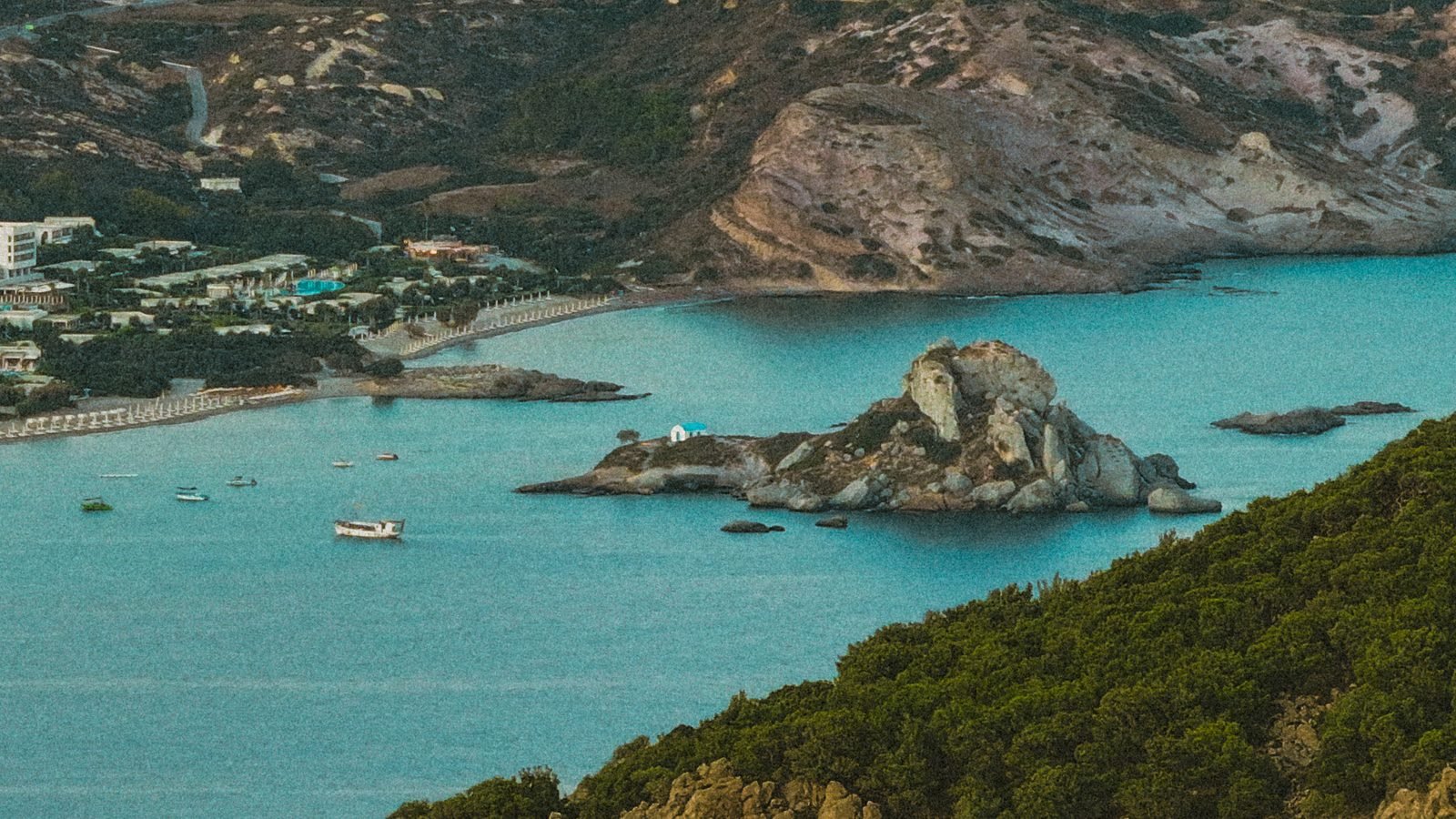
If you asked us which month to book and we had no rooms to fill, we would still say September. The sea sits at 25.6 °C, essentially as warm as it gets all year, while the air drops to 27.6 °C from the 30.9 °C of July and August. That one gap is the whole argument: you swim in August water and walk in spring air. Here is what actually changes through the month, and what it costs.
On this page
- The September numbers, in one table
- The sea, and why it is warmer than the air suggests
- The first week is a different holiday from the rest
- The August comparison, honestly
- What September does better than July
- The meltemi, and why our side stays flat
- What gets cheaper and what does not
- What to pack
- Who should not come in September
The September numbers, in one table
All figures from the same source we use across the site, so the months are comparable with each other rather than pulled from four different places.
| Month | Avg high | Avg low | Sea |
|---|---|---|---|
| July | 30.9 °C | 22.6 °C | 24.9 °C |
| August | 30.9 °C | 23.0 °C | 26.1 °C |
| September | 27.6 °C | 20.7 °C | 25.6 °C |
| October | 23.6 °C | 17.4 °C | 23.2 °C |
Read the September row against the August row and the point is obvious. The air gives back 3.3 degrees, the sea gives back half a degree. Nobody swims in a half-degree difference. Plenty of people notice three degrees at two in the afternoon.
The sea, and why it is warmer than the air suggests
Water takes far longer to heat and cool than air does. By September the Aegean has spent two months absorbing July and August sun, and it is still handing that heat back. That is why the sea peaks a month or so after the air does, and why 25.6 °C in September feels like nothing has changed since the middle of summer.
In practice, September is the month where you stop planning your swims around the heat. In August you go in because you have to. In September you go in because you want to, and you stay in longer.
One honest caveat about averages: a monthly figure is a monthly figure. The first week of September is warmer than the last, in the water and in the air. If your dates are at the very end of the month, read our October guide as well, because late September behaves more like early October than like August.
The first week is a different holiday from the rest
This is the part most month-by-month guides flatten out, and it matters more than any temperature. School holidays in several European countries run into the first days of September. Until they end, the village, the beach and the boats feel like August.
From the second week onwards it empties out, noticeably, week by week. By mid-September you get the version of Kos that people who come back every year are actually coming back for: everything open, space on the sand, no queue for a table at nine in the evening, and the staff in the tavernas with time to talk to you.
If you can choose your dates freely, choose the middle two weeks. If you are tied to school holidays, you will get a warm, busy, entirely good week — just know which of the two Septembers you booked.
The August comparison, honestly
We are not going to run August down. It is the month the island is built around and it has an atmosphere the quieter months do not.
But the heat is real. Highs in Kardamena are frequently reported at 38 °C in August and occasionally above 40 °C, and that is not a number you plan a walk around. It changes what you can do with a day: the middle of it belongs to the shade or the water, and sightseeing gets pushed to early morning or evening.
September gives that middle of the day back. The Asklepion, the castle in Kos Town, the mountain villages — all of it becomes a normal thing to do at eleven in the morning instead of an endurance test. If a hire car is part of your plan, that is when it starts earning its keep, and we go through whether you need one at all in our honest answer on hiring a car in Kos.
What September does better than July
- The water. 25.6 °C against 24.9 °C in July. September genuinely has the warmer sea of the two.
- Walking and sightseeing. Three degrees cooler in the afternoon is the difference between a plan and a retreat.
- Space. From the second week, the beach and the tavernas have room in them.
- Evenings. An average low of 20.7 °C is a proper outdoor evening without the sticky nights of late July.
- Boats. The Nisyros trip from our own harbour still runs on the full summer schedule, and the crossing is calmer than it is in the windier weeks.
The meltemi, and why our side stays flat
The meltemi is the north wind that blows across the Aegean from mid-May. On Kos it is weaker than on the islands of the central Aegean, so nobody should reorganise a holiday around it, but it does land on the north coast — Tigaki, Marmari and Mastichari take it directly. That is exactly why the kitesurfers are up there.
Kardamena faces south. That is geography rather than marketing, and you can check it on any map: when the north coast is choppy, our water is usually flat. On a windy September morning, the practical advice is to spend the day south or west rather than driving north into it. Which beach to pick for which day is in our guide to the beaches near Kardamena.
What gets cheaper and what does not
Cheaper: accommodation and car hire both come off the August peak, and they keep sliding as the month goes on. The last ten days of September are materially cheaper than the first ten.
Not cheaper: the tourist tax. The Climate Crisis Resilience Fee counts 1 April to 31 October as high season, so September is charged at the full rate. Studios in our category sit in the €2.00 a night band, per unit per night rather than per person, and it is collected at check-out rather than by the booking site. Seven nights adds €14.00 to the bill. The full rate table is in our explainer on the Greek tourist tax.
Unchanged: the day-to-day. Two sunbeds and an umbrella still run €15 to €20, a taxi from the airport rank is still around €25 to €30, and the Nisyros boat from our harbour is still €25 to €35 per adult before the €10 volcano bus and the €5 crater fee that catch people out. We break a whole week down in how much spending money you actually need.
For a hire car we stopped printing day rates, because a number like that ages badly. Message our partner, Mareva Rent a Car, on WhatsApp with your dates and they will quote you directly, with no card charge held as a deposit and full insurance already included.
What to pack
Everything you would pack for August, plus one light layer for the evening and closed shoes if you intend to walk. That is the whole list. An average low of 20.7 °C is warm by most standards, but it is three degrees off August, and on the last evenings of the month you will want sleeves on a balcony at eleven at night.
What you will not need is a raincoat. September sits at the dry end of the Kos year — the rain arrives with October and then stays until March.
Who should not come in September
Two kinds of traveller, and we would rather say it than have you disappointed.
If you want the island at full volume — every bar loud, every sunbed taken, the particular energy of a resort at peak — book August. September after the first week is a calmer place, and calm is the point rather than the compromise.
And if you are chasing the absolute cheapest week of the season, September is not it either. That is late October, and it comes with a genuine gamble about what is still open. We set that out plainly in our October guide, and we compare all twelve months in the month-by-month guide to visiting Kos.
Everyone else: this is the one. Warm water, walkable afternoons, room to breathe from the second week, and a village that is still fully itself rather than winding down.
Quick answers
Is September a good time to visit Kos?
It is the month we would pick ourselves. September averages 27.6 °C by day against 30.9 °C in both July and August, while the sea stays at 25.6 °C, barely off its August peak of 26.1 °C. You get summer water with spring walking weather, and after the first week the crowds thin out. The trade-off is that the second half of the month starts drifting towards autumn, and a few places begin winding down.
How warm is the sea in Kos in September?
The September average is 25.6 °C, against 26.1 °C in August and 23.2 °C in October. That is the warmest water of the year in practice, because the sea holds the heat it absorbed through July and August. Kardamena faces south and is sheltered from the meltemi, so the water on our side is usually flat as well as warm.
Is Kos still busy in September?
The first week still feels like August, because school holidays in several countries run into early September. After that it empties out noticeably week by week. Mid-September onwards is the sweet spot: everything is open, the beach has space on it, and you can walk into a taverna at nine in the evening without waiting.
Is it cheaper to visit Kos in September?
Accommodation and car hire both come down from the August peak, and the further into the month you go the more they drop. What does not change is the tourist tax, which counts 1 April to 31 October as high season, so September is charged at the full rate. For a car, message our partner Mareva Rent a Car on WhatsApp and they will quote you directly, with no card charge held and full insurance included.
Does it rain in Kos in September?
Rarely, and this is the honest version rather than a promise. Kos gets around 730 mm of rain a year and almost all of it falls between October and March. September sits at the dry end of the year, closer to the summer months than to the autumn ones. Expect dry days and pack a light layer for the evening rather than a raincoat.
Is Kardamena still open in September?
Fully. September is still season here — the tavernas, the beach bars, the boats and the buses all run normally, which is the main practical difference between September and the second half of October. We are open from April to the end of October, so September is comfortably inside our own season.
Last updated: September 2026